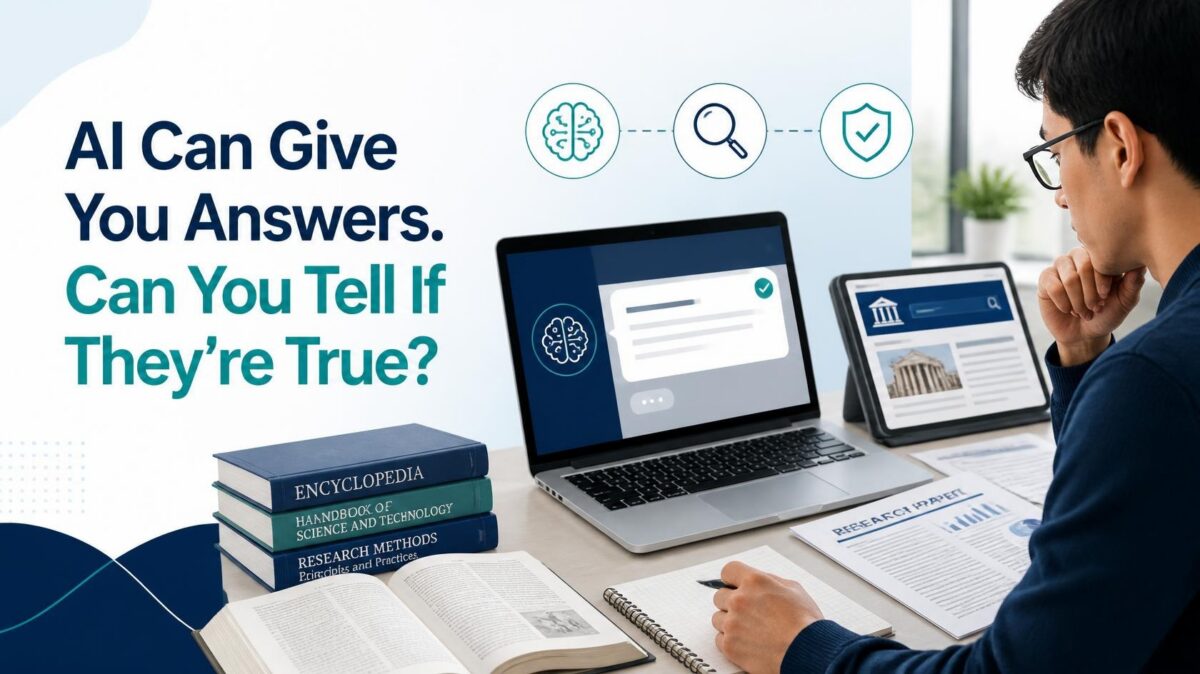
AI can give you answers in seconds, but how often do we stop to check whether those answers are accurate?
One of the things I find interesting about the growing use of artificial intelligence is how we can easily become comfortable with the answers it provides. We ask a question, receive a detailed response, and sometimes accept it without asking further questions.
But here is something we need to remember: an answer can sound intelligent, convincing and well-written without being correct.
AI tools can make mistakes. They can provide outdated information, misinterpret a question, misrepresent facts or even produce references that do not exist. The problem is not necessarily that the technology makes these mistakes; the problem is that we may not recognise them, especially when we lack the knowledge or willingness to verify what we have been given.
This is why digital literacy is more important than ever. Digital literacy is not simply knowing how to operate a smartphone, browse the internet or use an AI tool. It also involves knowing how to evaluate information, recognise questionable claims, identify reliable sources and make informed decisions about what to believe and share.
Before accepting an answer generated by AI, ask yourself a few questions.
- Can I verify this information from a reliable source?
- Does the source actually support the claim being made?
- Is the information current, especially if it concerns a recent event?
- Am I accepting this answer because it is accurate or simply because it sounds convincing?
These questions matter whether we are using AI for research, writing, education, business or everyday decisions.
As useful as AI can be, it should not replace our willingness to learn, think critically and exercise sound judgement. In fact, the easier technology makes it to obtain information, the more important it becomes to know how to evaluate that information.
We must also remember that access to information is not the same as understanding it, and having an answer is not the same as having the right answer.
At Ink & Insight, we believe that learning should go beyond acquiring information. It should help us become more informed, thoughtful and responsible in how we use knowledge.
Let’s discuss: Have you ever received an answer from an AI tool that turned out to be incorrect? What did you learn from the experience?